SUPERNOVA
30k COTS
A Full Reimagining
With the success of the past teams launches, pushing for new heights in the 30k category calls for a reimagining of the past years rocket designs. With changes every year, from the composite bulkheads after the first years recovery failure, to custom carbon tubing for weight saving after the second year weight issue. One thing that stands out on all three rockets is available space. When shooting for 30k this space is drastically reduced. The team has to optimize drag on the rocket calling for a smaller body tube along with shorter length. While making the rocket shorter, the rocket motor has to be stronger and therefor larger. This extra length also removes usable space for the team.
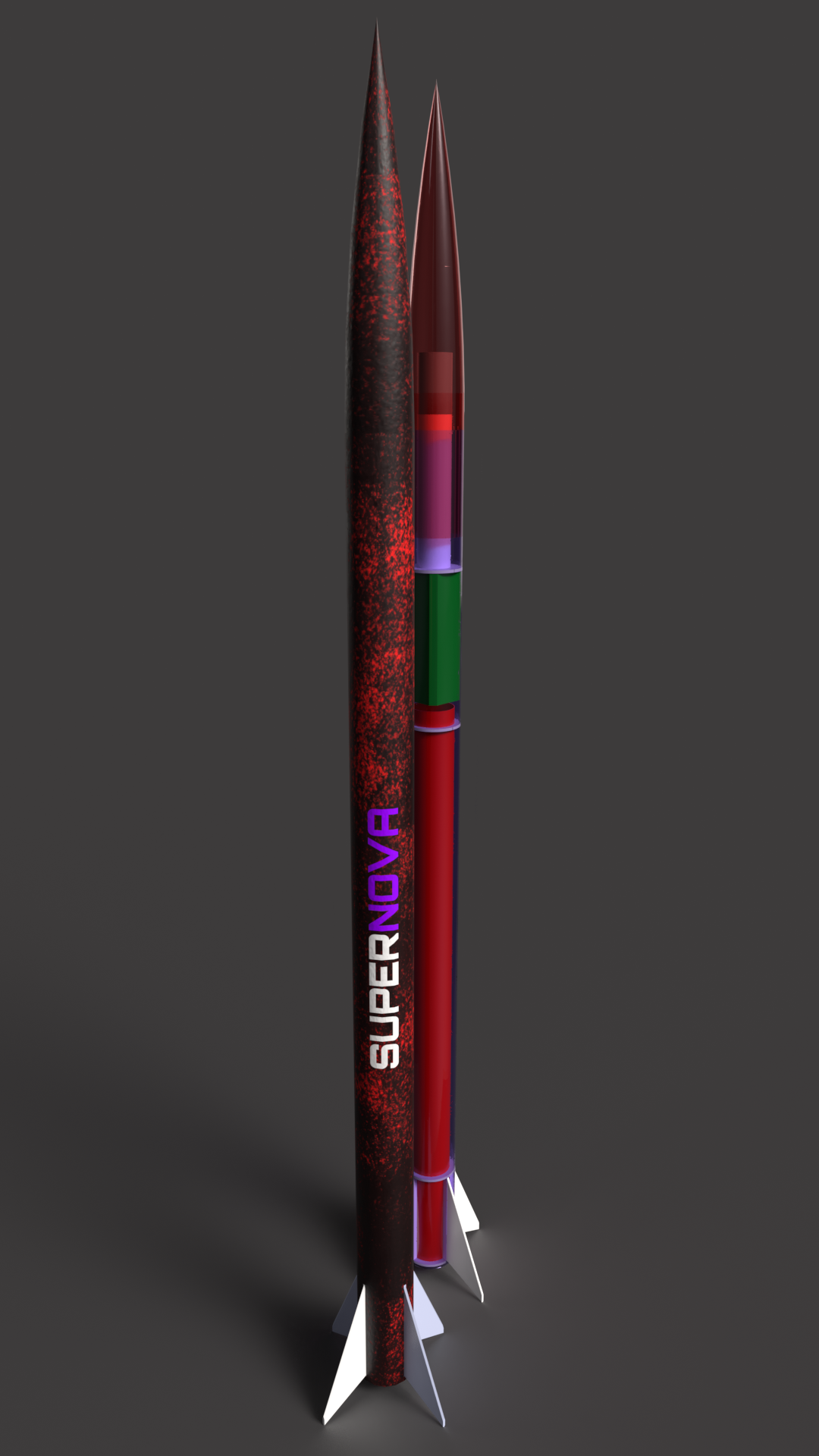
Apogee: 30,540ft
Max Velocity: Mach 2
Acceleration: 28G
Time to Apogee: 38s

Apogee: 5000ft RUD
Avionics Bay
2ft Drogue Parachute
10ft Main Parachute
8.8 lb Payload
4in Body Diameter
10ft 2in Tall
O5500x Motor
Results
Overall: 119th of 145
30k COTS: 15th of 21
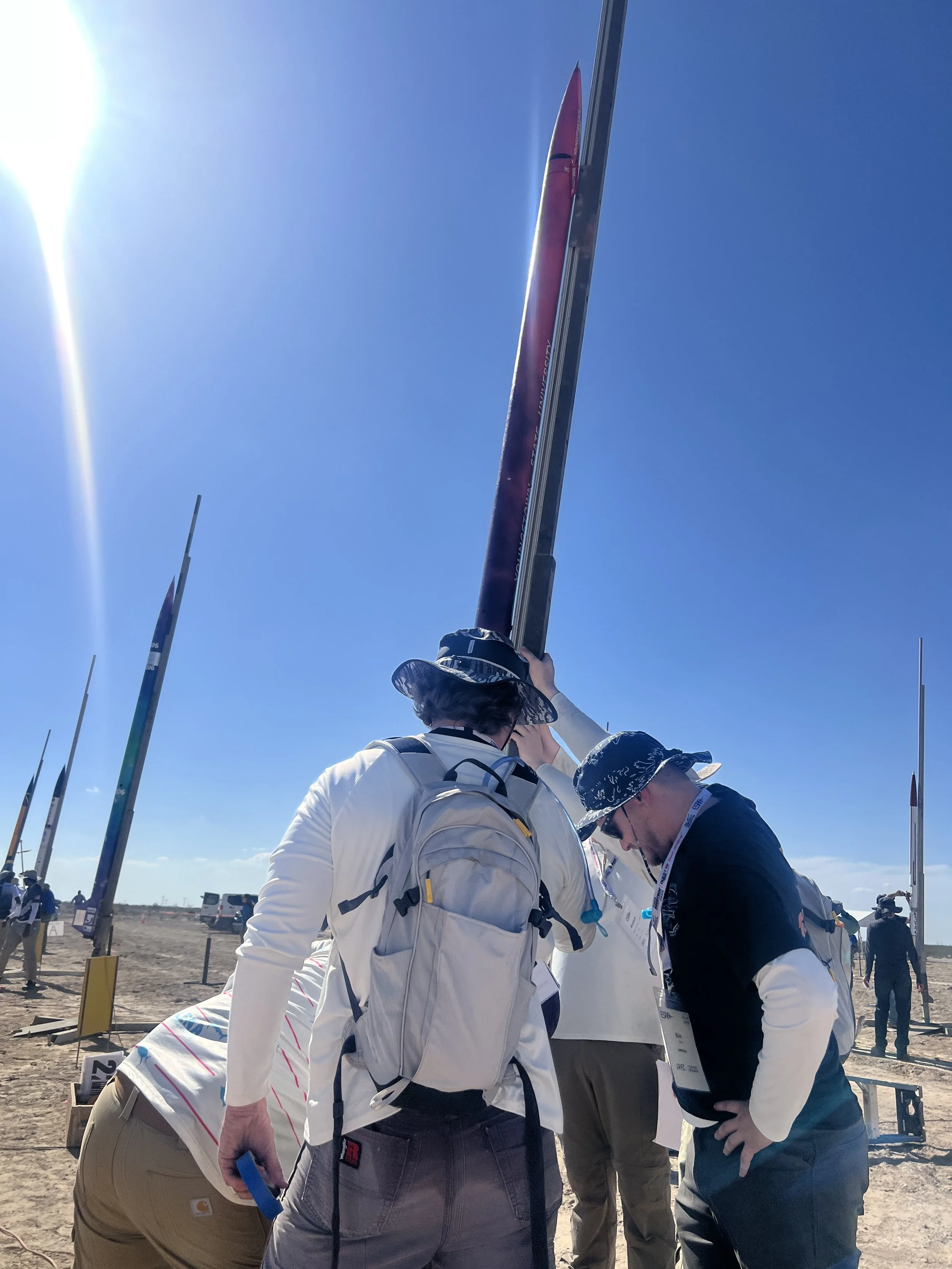
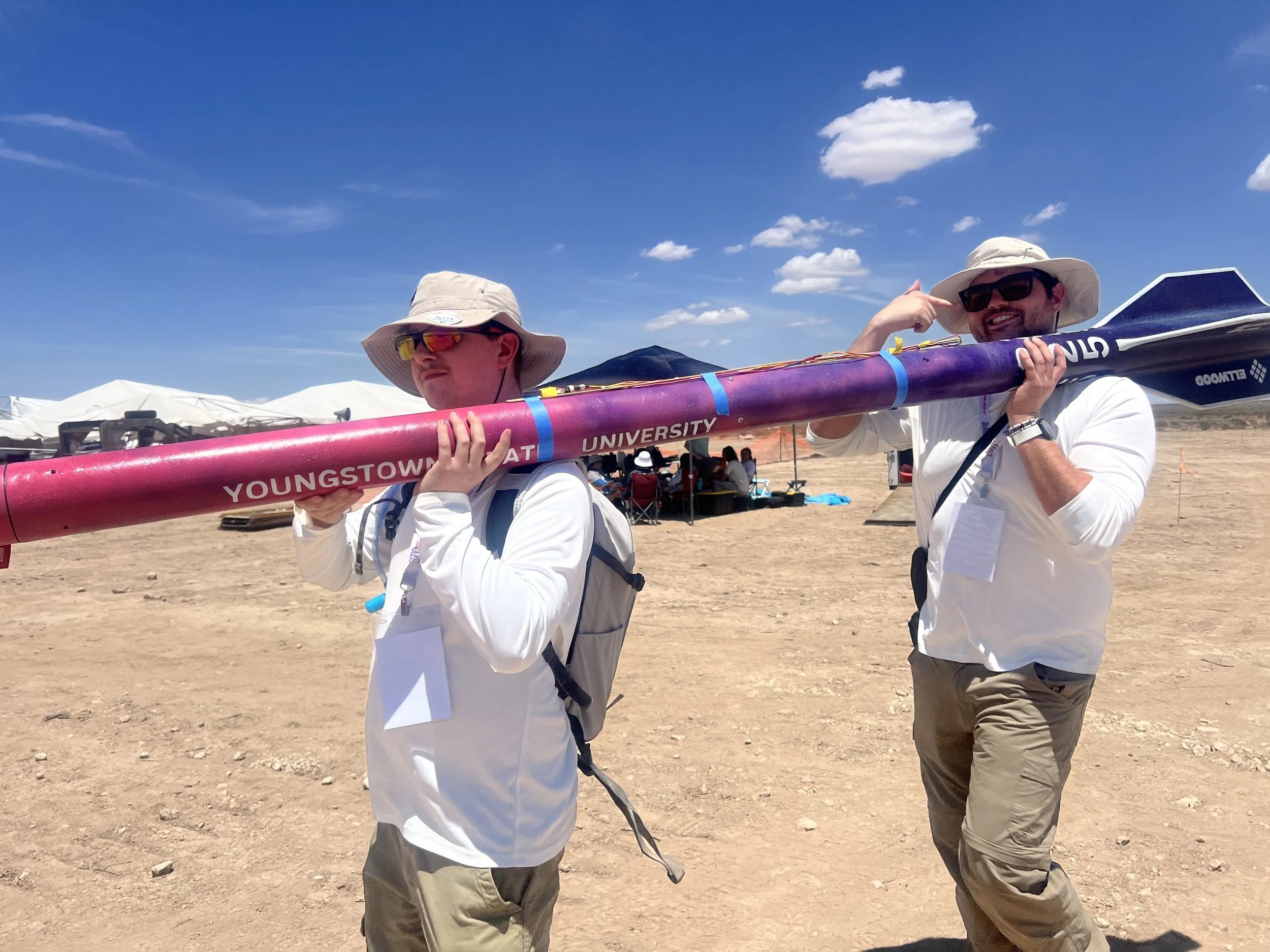
The 2024-2025 Penguin Rocketry Team launched Supernova at the 2025 International Rocket Engineering Competition, marking the team’s fourth consecutive year competing in the global competition that is hosted in Texas each June. This marked the team’s first year at entering the 30,000ft competition 30k COTS. Using last year’s knowledge of creating custom tubing, a major cost of entry was reduced.
The main focus of this year was to reach the desired 30,000ft mark. With emphasis on system integration as the usable space in the rocket is very little while needing every component that existed in prior years. One major change that was needed is using CO2 for the ejection at apogee, as black powder is unreliable at such heights. Another major change was using single deploy, as the rocket needed to be as short as possible, there could only be one separation point that needed to release both the drogue and main parachute.
Sponsors